Showing posts with label Comprehension Questions. Show all posts

Monday, April 28, 2008

Comprehension Questions


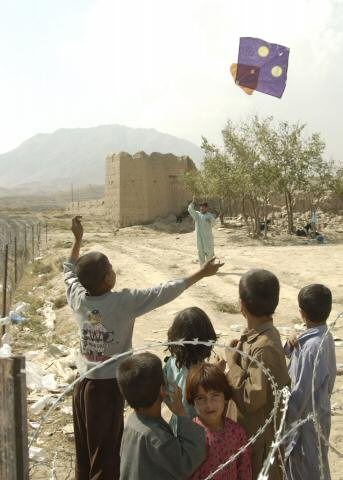
The picture is of children in Afghanistan flying a kite.

The Kite Runner

I am really looking forward to hearing what you have to say about this book! It is very different from the books we have read so far for many reasons, not the least of which is that is was written just a few years ago. This is the first book we have read by an author that is still alive! The story includes events that have happened during your lifetimes, including the terrorist attacks of September 11, 2001. Not only does the book tell an amazing story, but includes the history of Afghanistan over the past 40 years. I think the history will fascinate you as much as the plot touches you.

Enjoy reading this book, you have two entire weeks to go through its 370 pages, so take your time and savor it. I’m looking forward to discussing it with you. Don’t forget to fill out your reading journal!

Chapters 1, 2, 3
1. What does Amir’s teacher say about Shi’a Muslims? Do Hassan or his father, Ali, fulfill this stereotype?
2. What type of a man is Baba? How does he view the world?
3. What is Baba’s definition of sin? Do you agree with him?
4. Baba worries that Amir is a coward. He says, “A boy who won’t stand up for himself becomes a man who can’t stand up to anything.” Is this true about Amir? Do you agree or disagree with Baba’s statement?

Chapters 4, 5, 6
5. Compare and contrast Ali and Hassan to Baba and Amir.
6. What character qualities do we see in Hassan? Which do we see in Amir?

Chapters 7, 8, 9
7. What motivates Amir to do well in the kite tournament?
8. What does Amir do when he sees Hassan in the alley?
9. How does Amir’s inaction affect the way he feels about Hassan? Why do you think it has this affect?
10. Amir decides that something must be done to get rid of Hassan. What does he do? What is Baba’s response?
11. What are your thoughts about Amir and Hassan?

Chapters 10, 11, 12
12. How has Kabul changed?
13. How does Baba respond to the idea of a woman being raped? How does this contrast to Amir?
14. What happens to Baba’s memories in America? What happens to Amir’s memories?
15. Baba makes an observation about Soraya, saying, “It may be unfair, but what happens in a few days, sometimes even a single day, can change the course of a whole lifetime, Amir.” How does Amir know that is true?
16. Soraya reveals her past to Amir, why do you think he still withholds his from her?

Chapters 13, 14, 15
17. Compare and contrast the General and Baba. Who do you respect more?
18. Rahim Khan says to Amir, “Come. There is a way to be good again.” How is going to Pakistan the first step in Amir’s redemption?

Chapters 16, 17, 18
19. We encounter Hassan again as an adult. What kind of man has he become?
20. Why does it so surprise Amir when he looks in the photo and sees “a man who thought the world had been good to him”?
21. What does Amir learn about Hassan?

Chapters 19, 20, 21
22. How will Amir be redeemed?
23. Why is planting the money under the mattress symbolic of how Amir has changed?
24. What horrible situation is the orphanage director living under?
25. What have the Taliban done to the country?

Chapters 22, 23, 24, 25
26. What do they witness at the soccer match?
27. Who is the evil sociopath?
28. Why is getting beaten cathartic for Amir?
29. How do the events in the room mirror Amir’s childhood?
30. Rahim Kahn says that, “A man who has no conscience, no goodness, does not suffer.” Is that true?
31. Do you think Baba and Amir are similar now?
32. “True redemption is when guilt leads to good.” Is that true?
33. How is Hassan’s character summed up in the lesson he taught Sohrab, “Father used to say it’s wrong to hurt even bad people. Because they don’t know any better, and because bad people sometimes become good”?
34. Hassan used to run kites for Amir, and now Amir is running kites for Sohrab. In what other ways have we seen the plot come full circle?

I want you to choose 12 questions to answer. Any twelve, your choice. This is our last book for the year, and I want to give you the opportunity to answer the questions you want. You will also be writing your own essay question, so keep that in mind as you read! More about the essay later:)

Monday, April 14, 2008

Lord of the Flies


Over the next two weeks you will be reading and writing about Lord of the Flies by William Golding. This classic book will be difficult to forget once you have read it. Golding's purpose in this novel is to explore human nature in a raw and unhindered environment. He chooses his subjects to be children so that they are unbound by the codes and boundaries of society.

Golding's purpose in writing the book, in his own words, was, "an attempt to trace the defects of society back to the defects of human nature." This is exactly what you will be looking for while reading the book. This time around we will focus on larger themes rather than the usual comprehension questions I ask. I have hinted to the themes below and you will all be responsible for answering the following questions. Please let me know if you have any questions along the way!

Enjoy this thought provoking book!

What time in history is the book set? How does this contrast to what is happening on the island?

What do Ralph and Piggy represent?

What does the conch represent? What is it replaced with?

What do the boys think the beast is? What does Simon know the beast is?

Is Simon a Christ figure in the story? What does his hiding place represent?

What do Jack and Roger represent?

What changes in the boys when they paint their faces? Why does this change take place?

What is the irony of their rescue?

Did you like or dislike the book? How did it compare to other books we have read so far, especially Heart of Darkness?

Clarification - Samneric are the twins, Sam and Eric:)

Monday, March 31, 2008

Comprehension Questions


Here are your questions for this amazing book. Enjoy reading it, it is a treasure!

Introduction - It is vitally important that you read the introduction. It explains the purpose of the book, how it was written, the author’s life, etc. and it is necessary to understand this, in order to appreciate the book.

Q1 What book did he read before he started writing Cry, the Beloved Country? How did it influence him? Kevin
Q2 Book 2 was inspired by who? Tyler
Q3 Who was Dr. Verwoerd and how does he personify the way many White South Africans felt about the natives? Daniel

Book One
Chapter 2
Q4 What had they hoped for their son?
Chapter 5
Q5 What has been the result of the destruction of the tribe? How are Kumalo’s brother and sister victims of Johannesburg?
Chapter 7
Q6 Msimangu says his, “one great few in my heart, that one day when they are turned to loving, they will find we are turned to hating.” What does this mean? Do we see it become true? Kevin, Tyler, Daniel
Chapter 8
Q7 Who does the government fear? Why do they find the “heart” more of a threat than the “voice”? Kevin
Chapter 9
Q8 Describe Shanty Town.
Chapter 11
Q9 Who is the murdered victim? What is the connection between Jarvis and Kumalo?
Chapter 12
Q10 Summarize the debate about education, law, and crime. Tyler
Q11 What purpose does it serve to keep the natives ignorant? What is the benefit? What is the harm? Daniel
Chapter 14
Q12 Summarize what we know about Absalom. The name Absalom means “father is peace.” Do you think there is a reason Paton decided to name his character Absalom?
Chapter 17
Q13 Why is Kumalo so moved by the lawyer who “takes the case for God”?

Book Two
First read the Gettysburg Address that so influenced Jarvis, by clicking here.
Chapter 21
Q14 Summarize what we know about Arthur Jarvis.
Q15 How does Arthur Jarvis feel about the racial division in South Africa? Describe his writings. Kevin
Chapter 22
Q16 What is “behind” the judge? Who is responsible for the laws? How doe the natives feel about the judge and laws? Daniel
Chapter 28
Q17 What do you think of the verdict?
Chapter 29
Q18 What story does John Kumalo refer to?
Q19 Contrast what he did tell his brother, and what he didn’t tell his brother. Kevin
Q20 What does Msimangu give to Kumalo? How does K respond? Tyler

Book Three
Chapter 30
Q21 Describe Kumalo’s homecoming.
Q22 Kumalo’s friend says that, “kindness and love can pay for pain and suffering.” How do we see this come true? Daniel
Q23 What does this same friend say about suffering? Is this true? Tyler
Chapter 33
Q24 What does Jarvis do for the native community? Why do you think he does these things? Kevin, Daniel, Tyler
Chapter 34
Q25 Why did Jarvis add to his letter the line, “You should know that my wife was suffering before we went to Johannesburg.” Why does this move Kumalo? Kevin
Chapter 35
Q26 Why is Kumalo so quick to remind the demonstrator all that the White man has done for them? (Think about what Msimangu said about love and hate.) Daniel
Chapter 36
Q27 Why does Kumalo go up the mountain? What Biblical imagery does this conjure up? Tyler
Q28 What is Kumalo thankful for?

I wrote your names after the questions I want you to answer. In addition to answering those questions, choose three more to answer as well. Don’t forget to fill our your reading journal!

Monday, March 3, 2008

The Great Gatsby


The Great Gatsby is one of the most famous pieces of American Literature. It has become the social commentary of an entire decade - the 1920’s. The ‘20s was a time contradictions. Prohibition made the production and consumption of alcohol illegal in an attempt to legislate morality. This was a reaction to the immorality that some saw pervading society. As you will see in the book extra-marital affairs became more common, women enjoyed a lot more freedom, and society was becoming less religious.

We encounter the wealthy, careless, and immoral in this book. The characters will surprise and confuse you. Fitzgerald’s style of writing takes a while to get used to, so persevere through the slow beginning. You will be rewarded in the end. The book forces you to challenge people’s perceptions of themselves. We see the consequences of envy, greed, immaturity, and deceit woven into a magical story. The book has a dream like quality. The images are unbelievable, bathed in hot humid air. The conversations are stilted, rhythmic and inconclusive. In doing this Fitzgerald is making a point about the setting and the characters. Their actions and thoughts are unbelievable, thus the writing style mirrors that, as well as the chaos of the decade.

I hope you enjoy this book! The plot is fascinating and tragic, I am looking forward to hearing your thoughts about it. Below I have assigned you questions to answer. In addition to answering those questions, choose any 3 questions as well.

Kevin - Ch 1, Q 1 and 3. Ch 3, Q 2. Ch 4, Q 3. Ch 8 and 9, Q 1 and 4.
Tyler - Ch 1, Q 1. Ch 2, Q 1. Ch 4, Q 2. Ch 5, Q 1 and 2. Ch 8 and 9, Q 4.
Daniel - Ch 1, Q 2 and 3. Ch 2, Q 1. Ch 4, Q3. Ch 5, Q 2. Ch 7, Q 1.

Ch 1
1. What advice does Nick, the narrator’s father give him?
2. What are Tom and Daisy like? What character qualities do they exhibit?
3. What is Gatsby looking at across the bay at the end of the chapter? What does green symbolize?

Ch 2
1. Describe the sign they pass on their way to New York.
2. What do we know about Gatsby by the end of this chapter?

Ch 3
1. How does Nick finally meet his neighbor Gatsby?
2. What does Nick think about himself? Hint: It’s the last line of the chapter.

Ch 4
1. What is the story of Gatsby and Daisy?
2. Why did Gatsby buy his mansion?
3. Is Gatsby vain?

Ch 5
1. How do Gatsby and Daisy finally meet?
2. Gatsby know exactly how long it has been since he has seen Daisy. What does this show about his level of obsession?

Ch 7 (in this chapter everything becomes transparent, especially the intentions of Gatsby and Daisy)
1. When does Tom realize what is going on?
2. What does it mean that “Her voice is full of money”?
3. Gatsby claims that Daisy “never loved you”, how do we, as the reader, and Tom know this is not true?
4. Why is it so devastating to Gatsby that Daisy does/did love Tom?
5. How does Daisy respond to the position that Gatsby has put her in?
6. How does Myrtle die and who kills her?

Ch 8 and 9
1. Daisy is described as a “grail.” What is the significance of this?
2. How does Gatsby die?
3. Why does Nick have such a hard time finding people to attend Gatsby’s funeral?
4. Nick realizes what type of people Tom and Daisy are, how does he describe them?

Friday, February 15, 2008

Of Mice and Men


I hope you are excited, because you are about to read an amazing book! Of Mice and Men by John Steinbeck is his masterpiece. I know Kevin and Daniel enjoyed The Grapes of Wrath, so you know what to expect from Steinbeck - impeccable character development, fascinating plots, and gut wrenching moral dilemmas. Steinbeck desired to tell the stories of the people who lived on the margins of society. To do this he would go live and work with them. Before he wrote The Grapes of Wrath, he went to Oklahoma, joined some migrants and traveled with them to California. Once there he lived with them in their camps and worked alongside them in the fields and orchards of California. If anyone knew how the migrant farmers of the 1930’s lived, thought, talked, and dreamed, Steinbeck did. Of Mice and Men reveals the deepest dreams and fears of its characters. This book grapples with the dream of land ownership and friendship, and the fear of loneliness. I want you to note the different relationships between the characters, particularly Lennie and George, Curley and his wife, and Candy and his dog.

There are many themes to explore in this book which makes it difficult to hone in on one, but I do not want to ruin the story by telling before hand what to look out for. So please enjoy the book, and we will discuss it once you have finished it. There are only a few questions for each chapter, most questions will be for when you have finished the book. A little different this time, hope I’m not confusing you. Also I am going to have the three of you answer different questions. This will lend a better exchange of ideas.

Chapter 1
A cat house is a house of prostitution.
1. What types of images does Steinbeck use to describe Lennie? What is the purpose of this?
2. “Guys like us, that work on ranches, are the loneliest guys in the world.” The entire dialogue after this line is important to contrast with the speech George makes about what he would do if he did not have Lennie. He does not really want that life, because that is the life of men who have no one. But this speech describes the typical life of ranch hands. It is a lonely empty existence.

Chapter 2
Pants rabbits are fleasJ
A tart is a flirt.
1. What type of a guy is Curley? How about his wife?
2. What is your response to Carlson’s desire to shoot Candy’s dog? The event is very important and serves as foreshadowing to the larger story.

Chapter 3
1. Slim is described as “God-Like” early in this chapter. Did you catch it? Why is he described this way?
2. What does the men’s discussion about Candy’s old dog show about them?
IMPORTANT - after his dog is shot, Candy regrets that he did not do it himself. This sticks with George.
3. What does Curly do to Lennie? How does Lennie respond? This important scene shows the reader the great strength Lennie possesses.
Chapter 4
“Pitchers” are movies. Back then they would have called movies “picture shows.” So Curley’s wife is talking about being an actress.
1. What do Lennie’s interactions with Crooks show about him?
2. Who else is lonely on this ranch?

Chapter 5
If this chapter had a title it would be “Broken Dreams.” Here we see the dashed dreams of Curley’s wife as well as George and Lennie’s dream die.
1. What is Lennie’s response to the dead puppy?
2. What is Lennie’s response to the death of Curley’s wife?
3. What do George and Candy fear Curley will do to Lennie?

Chapter 6
We are now back at the place where the book began. It is such a lovely spot, lush, green, peaceful. Yet the contrast to what is about to happen there is deep.
1. What do we learn about George and Lennie’s relationship in this scene?
2. George tells Lennie that they are going where, “ever’body gonna be nice to you. Ain’t gonna be no more trouble.” Why is George saying this?
3. How do the other ranch workers respond to what George does?

I am going to assign certain questions to be answered by each of you. Then you will choose any 3 additional questions to answer.
Kevin - Chapter 1, Q. 1. Ch 2, Q 2. Ch 3, Q. 3. Ch 6, Q. 2.
Daniel - Chapter 1, Q 1. Ch 3, Q 3. Ch 4, Q 1. Ch 6, Q. 2.
Tyler - Chapter 2, Q 1 and Q 3. Ch 5, Q 2. Ch. 6, Q 3.

Let me know if you need any guidance or if this confuses you. Enjoy the book, it really is amazing!

Info:
The title comes from a poem by Robert Burns, Scotland’s National Poet. Here is the poem along with a translation. Scottish English is certainly different than what we are used to.
Robert Burns, To a Mouse (Poem, November, 1785)
Scottish national poet (1759 - 1796)

The best laid schemes o' Mice an' Men,
Gang aft agley,
An' lea'e us nought but grief an' pain,
For promis'd joy!

Translation:

The best laid schemes of Mice and Men
oft go awry,
And leave us nothing but grief and pain,
For promised joy!

Friday, February 1, 2008

Metamorphosis


I am looking forward to hearing about your reaction to our next book, Metamorphosis by Franz Kafka. It is important to read Kafka because he has a unique style that has influenced other writers. Not only is the writing style unique, but also his plots are very imaginative. I mean who writes a book about a guy turning into a cockroach? Well Kafka does! It is because of his ability to create absurd plots, that society has coined the word “Kafkaesque” to describe stories that are unbelievable. Click here to see the dictionary definition of this word. I never watch Law and Order, but the other day I stopped because there was an interesting conversation taking place in the interrogation room. The detective was describing all the circumstances of the crime and how the suspect fit into it. When she was finished, the suspect said, “Well that was all very Kafkaesque.” And she responded, “Then that makes you the bug.” Well needless to say I was VERY excited, because sitting on the table in front of me was the very book they were talking about. And now you get to read it! The more literature you read the more often things like that will happen. I see references to authors and stories all the time, and it's always exciting to know where it comes from.

Since this is such a short book, less than 50 pages, I want to you research Kafka’s life before you start reading. I will then also post an article or two about the book. You will read those once you have finished the book, and your essay will be based on the articles and the book. Enjoy your reading!

Comprehension Questions
Answer the questions in bold as well as 3 questions of your choice.

Visit this site and read the biography section. What do you find interesting about Kafka?

Chapter 1
1. How do you like the opening line?
2. Gregor does not question the fact that he has transformed into a bug. Why?
3. Describe the different reactions each member of the family and Gregor’s boss have towards him.

Chapter 2
1. What character traits do Gregor’s mother and father exhibit?
2. He becomes increasingly more insect like. Describe the different ways he takes on more qualities of an insect. 3. What does the moving out of the furniture show about the way that his sister feels about him?
4. Why did Kafka choose to have his father throw an apple at him? What does the apple signify?

Chapter 3
1. Now the family is storing junk in his room. What does this show about their ever evolving opinion of him?
2. Who gives up on the notion that Gregor will “get better” first?
3. What was each family members reaction to seeing Gregor dead?

Once you have finished the book, read this article.

Monday, January 21, 2008

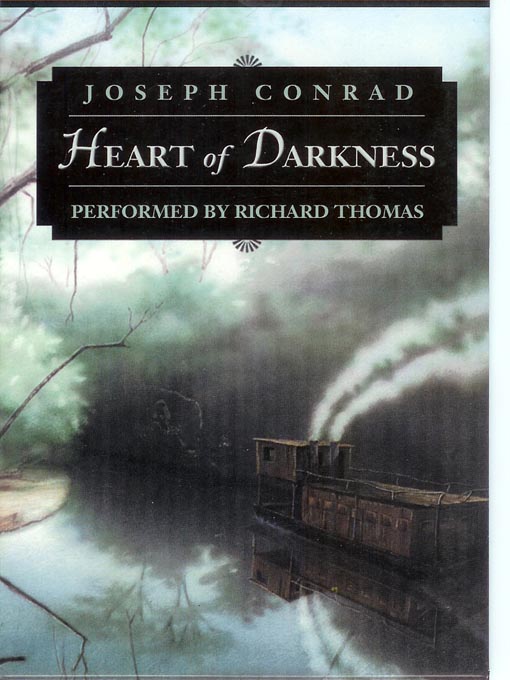
Heart of Darkness

Heart of Darkness

Reading this book for the second time, was a little bit of a struggle for me. It is not a favorite book of mine, but it is one of the most memorable books I have ever read. Long after you finish reading it, years from now, you will still think about it. I chose to read it in this class because it is a very important piece of literature. It was written to serve as the conscious to England during a time when it was building an empire around the world. As a consequence of its quest to assert its influence in new places, Africa and Asia primarily, the natives were victimized. The African author Chinua Achebe says that Heart of Darkness justifies racism, I disagree, but he makes another interesting point. “Africa is to Europe as the picture is to Dorian Gray – a carrier onto whom the master unloads his physical and moral deformities so that he may go forward, erect and immaculate.” Having just read The Picture of Dorian Gray, I’m sure that statement really strikes you. It is a keen observation and very true. Europe raped Africa in quest of wealth. The result was a beautiful and wealthy Europe, while Africa was enslaved. I think Heart of Darkness does a good job of showing the depravity of those extracting wealth from the continent. You will notice the inhumane ways the natives were treated by the Europeans. In preparation for this book read about the author, Joseph Conrad, and what inspired him to write it. The question to keep in mind while reading is, what group of people is truly civilized?

Your comprehension questions are below. Answer the questions in bold and then choose three additional questions. Enjoy the book!

Chapter 1
1. Marlow compares the Romans and their conquest of England to Europe’s colonization of Africa. Is this an accurate comparison?

2. What do you think of Marlow’s assertion that, “‘And this also (England)’, said Marlow suddenly, ‘has been one of the dark places of the earth’”?

3. “The conquest of the earth, which mostly means the taking it away from those who have a different complexion or slightly flatter noses than ourselves, is not a pretty thing when you look into it too much. What redeems it is the idea only.” Is this statement true, and why would Marlow feel this way after his experience in Africa? Does this also show Europe’s belief that “the ends justify the means?”

4. When we first encounter the natives, what are they doing?

5. What is it about the accountant that impresses Marlow?

6. At this point, what do we know about Kurtz? What is the mystery surrounding him?

Chapter 2
7. What is the purpose of Marlow calling the other Europeans “pilgrims”?
8. Do you see any similarities between the natives and the Europeans?

9. How did they pay the cannibals for their work? What does this say about how things are run and how natives are treated?

10. Does the story so far have a dream like quality? What makes this story feel unreal?

11. Why is it important that, “All Europe contributed to the making of Kurtz: and by-and-by I learned that, most appropriately the International Society for the Suppression of Savage Customs had entrusted him with the making of a report, for its future guidance”? Clearly, Kurtz is participating in these “savage customs” for his own gain. What have we learned of the character of Kurtz?

12. Why are the natives upset about Kurtz leaving?

Chapter 3
13. What are the methods Kurtz is using to extract so much ivory from the region?

14. How would you feel returning to civilization after an experience like Marlow had?

15. Why was Marlow unable to tell Kurtz’s intended the truth about him? Why does he feel a sense of loyalty towards Kurtz?

Do not forget to fill out your reading journal!

Monday, January 7, 2008

Picture of Dorian Gray

I find this book incredibly fascinating because of the way it discusses the effects of sin not only on our soul but on our bodies as well. Other themes that are interesting are the importance people place on beauty, the idea of aestheticism, and the amount of influence people and books have on us. Before you begin reading the book, familiarize yourself with Oscar Wilde, his life and this book. Also research aestheticism. It is a philosophy that Lord Henry adheres to and that greatly influences Dorian Gray.

Comprehension Questions

Please answer the questions that are in bold, than choose 3 additional questions to answer. You can answer in the comments section of this post. It would probably be best for you to answer the questions as you go through the reading. It is not necessary to answer them all in one post. Post answers as you have them. I hope the following helps you understand the book better. Before you begin reading each chapter, first read the questions for the chapter.
Chapter 1
How are Basil and Henry’s opinions of Gray different?
Chapter 2
What does Henry mean by “unspotted from the world…”?
There is a monologue about people influencing another that contains the line, “because to influence a person is to give him one’s own soul…” What do you think about that?
Define hedonism. Where is that term used and by who?
What does Dorian wish/pray for?
Chapter 3
Why does Henry desire to influence Dorian?
How do people at the party respond to Henry and his philosophies about life? What type of worldview is he advocating?
Chapter 5
Describe Sibyl Vane. How are her and Dorian different? The same?
What character qualities does Mrs. Vane lack?
Chapter 7
The following quote is very important. “But the picture? What was he to say of that? It held the secret of his life, and told his story. It had taught him to love his own beauty. Would it teach him to loathe his own soul? Would he ever look at it again?” Keep this quote in mind as you read and think about the book.
When does he first notice a change in the portrait?
Chapter 9
Describe the different reactions Henry and Basil have in response to hearing of Sibyl Vane’s death.
Chapter 10
Would we behave differently if we could physically see our soul?
What is the French School of Symbolistes?
Chapter 11
The book Henry gives Dorian greatly influences him? What is greater the influence of a person or a book?
Dorian looks as though he is “unspotted from the world” so people trust him. Are looks deceiving?
What do you think of the last line of this chapter?
Chapter 12
What do you think of Henry’s assertion that, “Sin is a thing that writes itself across a man’s face. It cannot be concealed. People talk sometimes of secret vices. There are no such things.”
What kind of influence does Dorian have on others? Does he prove Henry right when he said, “to influence another is to give him one’s own soul.”
Chapter 19
Henry references Matthew 16:26, “For what is a man profited if he shall gain the whole world, and lose his own soul?” Isn’t this book answering that question? What do you think of that?
What do you think of Henry’s view of Dorian’s life?
Chapter 20
Was it the portrait that ruined his life, or the fact that he can actually see his soul?

I will post the essay question next week! Its a good one:)